

Why Has My Sex Drive Disappeared? Understanding Changes in Women's Libido
There was a time when intimacy felt natural.
You wanted it. You looked forward to it. Maybe you didn't even have to think twice about it.
But lately?
You love your partner. You're still attracted to them. Your relationship might even be better than it's ever been.
So why does intimacy suddenly feel like one more thing on your to-do list?
Maybe you're constantly exhausted. Maybe you can't remember the last time you genuinely felt in the mood. Or maybe you've started avoiding intimacy altogether because you don't understand why your desire has changed.
And somewhere along the way, you started wondering:
What's wrong with me?
Here's something important to understand: A change in your sex drive doesn't automatically mean something is wrong with you or your relationship.
But if your desire has noticeably changed and it's bothering you, it's worth exploring why.
First, Let's Talk About Libido
Libido is another word for sexual desire, and there's no universal definition of a "normal" sex drive.
Some women naturally experience more sexual desire than others. Some notice their desire fluctuates throughout their menstrual cycle, during different life stages, or depending on what's happening in their lives.
And that's okay.
It's also important to understand that desire doesn't always happen spontaneously.
For some women, desire develops after intimacy or physical affection has already begun. This is sometimes called responsive desire, and it's a completely valid way to experience sexuality.
The concern isn't necessarily how often you want sex.
It's whether your experience has changed in a way that's affecting your happiness, confidence, relationships or overall well-being.
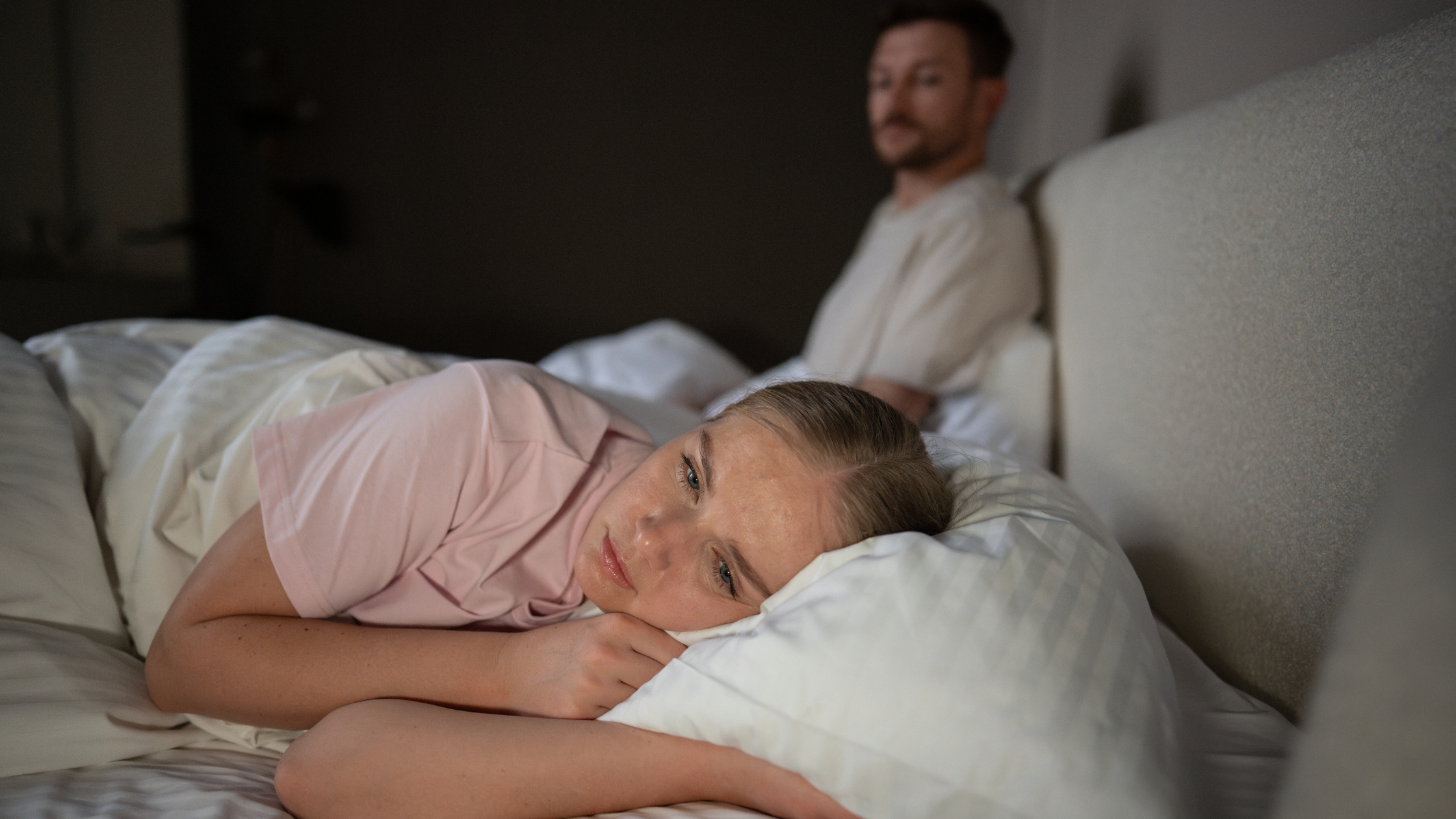
So, What Could Be Affecting Your Sex Drive?
There's rarely one simple explanation for changes in libido.
Sexual desire is influenced by a combination of physical, emotional, hormonal and relationship factors. Understanding what's happening often means looking at the bigger picture.
1. Hormonal Changes
Hormones can play an important role in sexual desire, and fluctuations throughout a woman's life may affect libido.
During perimenopause and menopause, changes in estrogen and other hormones can influence vaginal tissue health, lubrication, sleep and sexual comfort.
Some women notice a decrease in desire during these transitions, while others don't experience significant changes at all.
Hormonal shifts can also occur during pregnancy, postpartum recovery and breastfeeding.
If you've noticed changes in libido alongside symptoms like irregular periods, night sweats, vaginal dryness or disrupted sleep, those details may be worth discussing with your healthcare provider.
2. Stress and Mental Load
Sometimes your body isn't the only thing that's exhausted.
Your brain is, too.
Between work, relationships, children, responsibilities, appointments and the never-ending list of things that need to get done, finding the mental space for intimacy can be difficult.
When you're constantly thinking about what needs to happen tomorrow, it can be challenging to feel present in the moment.
Chronic stress can affect mood, sleep, emotional connection and sexual desire.
And sometimes, what looks like a libido problem is actually a sign that you're carrying more than you realize.
3. Fatigue and Poor Sleep
It's hard to prioritize intimacy when you're struggling to keep your eyes open.
Poor sleep can affect your energy, mood, concentration and overall well-being, all of which may influence sexual desire.
If you're waking up throughout the night, experiencing hormonal sleep disruptions or feeling consistently depleted by the end of the day, intimacy may naturally move further down your priority list.
This is one reason looking at libido in isolation doesn't always tell the whole story.
4. Vaginal Dryness or Discomfort
Sometimes desire changes because intimacy itself has become uncomfortable.
Vaginal dryness, irritation, painful intercourse or changes in vaginal tissue health can make sexual activity less enjoyable.
And when something becomes uncomfortable, it's understandable that you may begin avoiding it.
These symptoms can be associated with hormonal changes, particularly during perimenopause and menopause, but there are other possible causes as well.
Painful intimacy isn't something you should feel obligated to push through.
Identifying the cause is an important step toward finding appropriate treatment and making intimacy more comfortable again.
5. Pelvic Floor Health
Your pelvic floor plays an important role in bladder control, pelvic organ support and sexual function.
Changes in pelvic floor muscle function can sometimes contribute to discomfort, reduced sensation or difficulty with sexual activity.
However, pelvic floor concerns aren't always about weakness. Muscles that are overly tense or have difficulty relaxing can also contribute to painful intimacy.
That's why proper assessment matters before deciding which treatment or exercise approach may be appropriate.
6. Medications and Other Health Factors
Certain medications, including some antidepressants, can affect sexual desire or arousal.
Other health concerns, such as thyroid disorders, depression, anxiety and chronic pain, may also influence libido.
If you've noticed a change after starting a medication or alongside other symptoms, it's worth discussing with your healthcare provider.
Never stop or adjust prescribed medication without medical guidance.
The Emotional Side of Losing Your Desire
One of the hardest parts of experiencing changes in libido isn't always the physical change itself.
It's how you start feeling about it.
Maybe you feel guilty because your partner wants intimacy more often than you do.
Maybe you're worried they'll take it personally.
Maybe you miss feeling connected to that part of yourself.
Or maybe you're frustrated because you can't explain why something that used to feel effortless now feels complicated.
These feelings are valid, and they deserve space in the conversation.
But it's also important to remember that you don't owe anyone a particular level of sexual desire.
The goal isn't to force yourself to want intimacy.
It's to understand your own needs, identify concerns that may be affecting your well-being and explore what support might help.
When Should You Seek Help for Low Libido?
There isn't a specific number of times you should want sex each week or month.
And not every change in desire requires medical treatment.
However, consider speaking with a healthcare provider if:
Your sex drive has noticeably decreased and the change concerns you.
You're experiencing vaginal dryness, pain or discomfort during intimacy.
Changes in desire are affecting your confidence or emotional well-being.
You've noticed other symptoms, such as fatigue, sleep disturbances or menstrual changes.
You're struggling with changes in sexual sensation or arousal.
You simply want to better understand what's happening in your body.
You don't need to wait until your relationship is suffering or your symptoms become overwhelming to start the conversation.
How Vena Health + Wellness Can Help
At Vena Health + Wellness, we believe conversations about sexual health should feel just as natural as conversations about sleep, energy or skincare.
Because sexual health is part of your overall health.
During a Women's Health Consultation, we can explore your symptoms, medical history, lifestyle and concerns to better understand what may be contributing to the changes you're experiencing.
Depending on your individual needs, this may involve discussing hormonal health, vaginal wellness, pelvic floor concerns or whether further medical assessment is appropriate.
Vena also offers women's intimate wellness treatments, including technologies designed to address certain pelvic floor or vaginal tissue concerns. However, not every change in libido requires a procedure, and these treatments are not a universal solution for low sexual desire.
The right approach depends on understanding the underlying concern.
Our goal is to help you feel comfortable asking questions, discussing symptoms and exploring options that make sense for you.
You Used to Want Intimacy. Now You Don't. What Changed?
Maybe it's hormones.
Maybe it's stress.
Maybe it's the fact that you haven't had a genuinely restful night's sleep in months.
Maybe intimacy has become uncomfortable.
Or maybe several things have changed at once.
Whatever the reason, you deserve to have your concerns taken seriously.
You don't need to force yourself to feel the way you used to. But if something has changed and you want answers, you deserve the opportunity to find them.
At Vena Health + Wellness, we're here to help start that conversation.
Ready to better understand your body? Book a Women's Health Consultation with Vena Health + Wellness.